


Translate into Rusyn. Connect. Meet.
Instant, free AI translation into Rusyn for Slovakia and Poland, in Cyrillic and Latin letters, by the Rusynator.
Pannonian Rusyn is new and experimental: no native speaker has reviewed its translations yet. Please rate them to help.
Subcarpathian Rusyn is new and experimental: no native speaker has reviewed its translations yet. Please rate them to help.
Serbian, Croatian or Bosnian: please type č ć š ž đ, or use Cyrillic.
Rusyn
Your translation will appear here after a few seconds…
—
Want a reply? Write to Petro
Dictionary hits
No dictionary hits for this translation.
Machine translation — may contain errors.
Text you translate is kept to check and improve the translator, including training our translation models: for 30 days in full, then for up to 3 years without the time or your location. Please don't enter personal information. Privacy Policy
Translation models built on Meta’s NLLB-200 (CC BY-NC 4.0). Training data includes text from Rusyn Wikipedia (CC BY-SA 4.0). Rights holders who want their material removed from our training data can write to support@orynycz.com.
As featured












…thanks to Petro Orynycz’s Lemko translator […] I learned that [Meg Ryan’s great-great-grandfather] was killed in a mine.
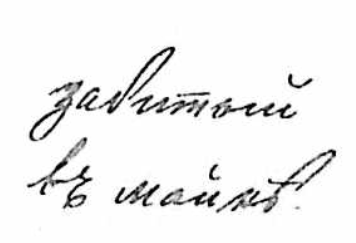
“забытый въ майнѣ”, killed in mine: Nicolaus Durniak’s cause of death in the Greek Catholic register, Old Forge, Pennsylvania, 1893 (Ancestry, via Megan Smolenyak)


Recent innovations, such as integrating neural translation engines with rule-based systems, have yielded encouraging results in enhancing translation accuracy for endangered languages, including those of Lemko.

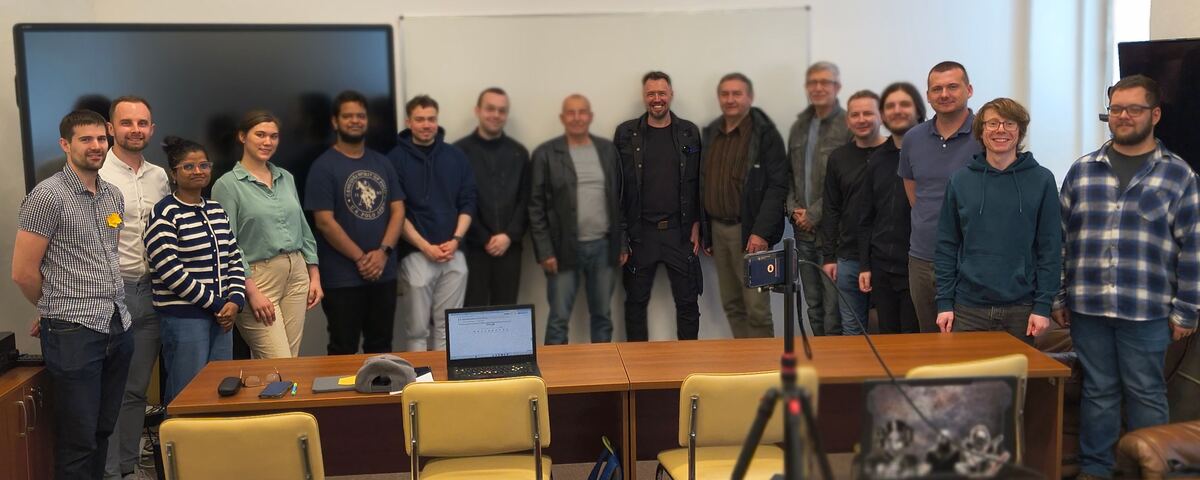
It was an honor to welcome Petro Orynycz, an AI engineer and linguist working on the Google Translate project, for a compelling guest lecture on low-resource languages and natural language processing at IISLab, Technical University of Košice.
Cover photo: guest lecture at IISLab, Technical University of Košice, April 2026 · IISLab
-
Thomas“This a great labor of love for us proud Lemko. My baba and dido would be so proud!”
-
Stephan“This translation is amazing. Thank you for making this available and digitally preserving the language in an interactive, utilitarian way.”
-
Anonymous“Used this for a roleplay Discord server that takes place in Transcarpathia. Helped with the immersion 10/10! Thank you! Дякую!”
Please cite Orynycz, P. (2023). BLEU Skies for Endangered Language Revitalization: Lemko Rusyn and Ukrainian Neural AI Translation Accuracy Soars. In: Degen, H., Ntoa, S. (eds) Artificial Intelligence in HCI. HCII 2023. Lecture Notes in Computer Science(), vol 14051. Springer, Cham. https://doi.org/10.1007/978-3-031-35894-4_10
About the language
Rusyn: which variety should you choose?
The Rusynator translates into four written forms of Rusyn, spoken around the Carpathians and by the communities who moved from there to the Pannonian plain. They differ in pronunciation, vocabulary and spelling conventions,9 so choose the one the person you are writing to actually reads.
Poland: Lemko. The Lemko of Poland, in the norm of Henryk Fontański and Mirosława Chomiak’s 2000 grammar, with the stress on the next-to-last syllable, as in Polish.5, 19 The Lemko Translator page tells its story.
Slovakia: Prešov Rusyn. The literary standard of Slovakia, codified in 1995. Its codifiers chose the speech of a small area between the West and East Zemplín dialects, so its stress is free and mobile.14, 16, 15
Pannonian (Serbia). The Rusyn of Ruski Krstur, Kucura and their neighbours in Vojvodina, written to a standard that goes back to Havrijil Kostelnyk’s grammar of 1923. Its stress is fixed on the next-to-last syllable.17, 9
Subcarpathia (Ukraine · Hungarian standard). Rusyn of Transcarpathia, written in the spelling of the Rusyn standard of Hungary as set out in Mihály Káprály’s orthographic dictionary of 2017.7, 6 That is one concrete choice among several written norms, not a standard accepted across Transcarpathia.
Scripts. Lemko and Prešov Rusyn come in Cyrillic with a Latin line underneath, in the Latin spelling you choose. Pannonian and Subcarpathian are Cyrillic only for now; both are new, experimental models that no native speaker has reviewed yet, so your feedback helps.
Each variety grew up beside a different neighbour, Moser notes: Lemko beside Polish, Subcarpathian beside Hungarian, Prešov beside Slovak, Pannonian beside Serbian and Croatian.9 Emigrants carried them across the Atlantic: Andy Warhol’s parents came from the Lemko village of Miková,13 and the Ruthenian National Association was founded in Shamokin, Pennsylvania, in 1894.10
So translate from English into Rusyn, speak Rusyn, and meet other speakers in person!
More about Rusyn: names, history and the four standards
Rusyn, Ruthenian, Russian? “Rusyn” is an old name. Into the early twentieth century all Ukrainians of Galicia and Bukovyna called themselves Rusyns, usually rendered “Ruthenians” in English, and before them so did the Rus’ people of the Grand Duchy of Lithuania, whom the Russian Empire renamed “Little Russians”.9 The confusion crossed the Atlantic: when the Greek Catholic priest Hryhorij Hruška founded the newspaper Svoboda in Jersey City in 1893, he called it in English “the first Russian political paper in the country”, a poor translation, Moser remarks, of a word that meant Ruthenian, not Russian.10 Today the adjective rus’kyj means “Rusyn” in Vojvodina and “Russian” in Slovakia.9
Rusyns in America. Emigrants from Galicia, Bukovyna and Transcarpathia took their identity disputes with them: in the United States most became “Ukrainians”, “Carpatho-Ruthenians” or “Russians”, and a few “Hungarians”, “Slovaks” or “Poles”.10 On 22 February 1894 in Shamokin, several brotherhoods broke away from the Union of Greek Catholic Brotherhoods, where Hungarophile and Russophile views prevailed, and founded the Ruthenian National Association, renamed the Ukrainian National Association in 1914; Svoboda, its organ, is the oldest Ukrainian newspaper in the world.10 About 13,000 Americans identified as Rusyn in the 1990 census, yet, Moser stresses, they played a tremendous part in organising the Rusyn movement after 1989.9 The Encyclopedia of Ukraine (1993) put Americans and Canadians of Lemko origin at 100,000 to 150,000, concentrated in Pennsylvania and around Cleveland.8 Warhol’s museum in Medzilaborce reopened in September 2026 after a three-year renovation costing almost €16 million.12
Lemko. Helena Duć-Fajfer of the Jagiellonian University in Cracow describes a Lemko literary life of more than a century: the newspaper Lemko (1911–1914), printed in the speech of the western Lemkos, was important for the development of the modern written norm; the language was taught in some schools in the 1930s using Metodyj Trochanowski’s textbooks; and the 2000 grammar was a major milestone in its codification.3, 5 Poland recognises Lemko as an ethnic-minority language under the 2005 Act on national and ethnic minorities.20, 3 Long contact with Polish has given it distinctive features, Moser notes.9 In Poland and in the western dialects of north-eastern Slovakia the stress falls on the next-to-last syllable; east of the Osława and of the Laborec it becomes mobile.19, 21, 16
The Prešov standard. On 27 January 1995 the codification of the Rusyn literary language of Slovakia was proclaimed in Bratislava.14, 16 The codifiers deliberately chose the speech of a small area between the West and East Zemplín dialects,16, 15 so the stress is free and mobile,15 and the pronunciation handbook calls the western speakers’ habit of stressing the next-to-last syllable an error in several places.15 The vowel ы, as in хыжа (house) or жытя (life), is typical of Lemko and of the Rusyn of Slovakia; standard Ukrainian does not have it.5, 15 If you want to learn the standard, Stefan Pugh’s The Rusyn Language (2009) is its grammar in English, with comparisons to Lemko and Subcarpathian Rusyn,16 and the Institute of Rusyn Language and Culture at the University of Prešov, which Moser in 2016 called probably the most active centre of the Rusyn movement in Europe,9 published pronunciation rules with a dictionary in 2021.15
Vojvodina: the oldest standard. In the mid-eighteenth century Rusnaks from the north-eastern counties of Hungary (Zemplén, Sáros, Borsod) moved to Bačka and founded Ruski Krstur and Kucura;17 the first settlers were sent to Krstur by the authorities in 1745 to repopulate the south after the expulsion of the Turks.4 Their language is closer to East Slovak than to any other Rusyn variety.9, 1 The seventeen-year-old schoolboy Havrijil Kostelnyk published the first book of poems in it in 1904 and wrote its grammar in 1923.17, 9 Today Rusyn is one of six languages in official use in the provincial authorities of Vojvodina, beside Serbian, Hungarian, Slovak, Croatian and Romanian.18 The stress is fixed on the next-to-last syllable, and there is no ы: the old *y merged with и.17
Hungary and Subcarpathia. Until 1918 the Prešov region, Subcarpathia and Vojvodina all belonged to the Kingdom of Hungary,9, 6 and Subcarpathia was Hungarian again in 1938/39–1944, when Ivan Harajda’s Grammar of the Ruthenian Language appeared in Uzhhorod (1941): “a compromise between many contradictory opinions” on the vernacular, in the author’s own words, though in Moser’s judgment it contains little vernacular at all.11 Two Rusyn villages remain in Hungary, Komlóska and Múcsony,6 and they speak differently: Múcsony like Vojvodina, Komlóska Lemko, as the Slavist András Zoltán explains.1 Rusyns from Subcarpathia have settled around Budapest since the 1990s,6 and Mihály Káprály of the Antal Hodinka Rusyn Institute wrote in 2019 that the Hungarian standard was built on an “all-Rusyn” base with elements of every variety;6 its orthographic dictionary came out in 2017,7 and in 2019 he reported that the school in Múcsony taught Rusyn from the fifth grade.6 The Rusynator’s Subcarpathian option follows the spelling of that dictionary.
A count from 1829. Johann Csaplovics counted about 359,000 Ruthenians in Hungary, which then included today’s Slovakia, Subcarpathia and Vojvodina, divided by dialect into Lissaks, Lemáks and others; they made up the majority of the population in the counties of Bereg, Ugocsa and Máramaros, in today’s Subcarpathia.2
Sources
- BENEDEK, Gergely. Komlóska ruszin nyelvjárása. Sajtó alá rendezte és az utószót írta Zoltán András. A Magyar Nyelvtudományi Társaság Kiadványai 241. Budapest: Magyar Nyelvtudományi Társaság, 2022, p. 167. ISBN 978-615-5061-21-9. DOI: 10.26546/5061226. Available at: mek.oszk.hu
- CSAPLOVICS, Johann v. Gemälde von Ungern. Erster Theil. Pesth: C. A. Hartleben, 1829, p. 205. Available at: archive.org
- DUĆ-FAJFER, Helena. Historia i sytuacja języka łemkowskiego w ostatnim stuleciu. Poradnik Językowy, 2021, no. 7, pp. 46–66 (pp. 46–48, 54, 56, 60). DOI: 10.33896/PorJ.2021.7.3
- FEJSA, Mihajlo [ФЕЙСА, Михайло]. Войводина. In: Русиньскый язык. Opole: Uniwersytet Opolski – Instytut Filologii Polskiej, 2004 (Najnowsze dzieje języków słowiańskich), pp. 375–376. ISBN 83-86881-38-0.
- FONTAŃSKI, Henryk – CHOMIAK, Mirosława. Gramatyka języka łemkowskiego. Katowice: Śląsk, 2000, pp. 12, 18–19, 34. ISBN 83-7164-178-8.
- KÁPRÁLY, Mihály [КАПРАЛЬ, Михаил]. Русинськый язык у Мадярщинї по 1989 рокови. Річник Руской Бурсы, 2019, vol. 15, pp. 171–182 (pp. 172, 177, 179). DOI: 10.12797/RRB.15.2019.15.05
- KÁPRÁLY, Mihály [КАПРАЛЬ, Михаил] (ed.). Русинськый ортоґрафічный словарь (з ґраматичныма таблами) / A ruszin helyesírási szótár (nyelvtani táblázatokkal). Budapest: Русинськый Научный Інстітут имени Антонія Годинкы – Országos Ruszin Önkormányzat, 2017.
- KUBIJOVYČ, Volodymyr. Lemkos. In: STRUK, Danylo Husar (ed.). Encyclopedia of Ukraine, vol. 3. Toronto: University of Toronto Press, 1993; online edition: Internet Encyclopedia of Ukraine [cited 2026-11-05]. Available at: encyclopediaofukraine.com
- MOSER, Michael. Rusyn: A New–Old Language In-between Nations and States. In: KAMUSELLA, Tomasz – NOMACHI, Motoki – GIBSON, Catherine (eds.). The Palgrave Handbook of Slavic Languages, Identities and Borders. Basingstoke: Palgrave Macmillan, 2016, pp. 124–135.
- MOSER, Michael. New Contributions to the History of the Ukrainian Language. Edmonton–Toronto: Canadian Institute of Ukrainian Studies Press, 2016 (Peter Jacyk Centre for Ukrainian Historical Research Monograph Series, 7), pp. 411–412. ISBN 978-1-894865-44-9.
- MOSER, Michael. Граматика руського языка Івана Гарайди 1941 р. та «народна мова» Закарпаття. Slavia Orientalis, 2022, vol. LXXI, no. 1, pp. 143–162 (pp. 143–145). DOI: 10.24425/slo.2022.141151
- NOVINY.SK. V Medzilaborciach otvorili múzeum Andyho Warhola. Prišiel aj prezident Pellegrini [The Andy Warhol museum opened in Medzilaborce; President Pellegrini attended]. Noviny.sk, 3 September 2026. Available at: noviny.sk
- OTRIOVÁ, Jana. The incredible story of the mother of Andy Warhol, the King of Pop Art. Rusyn.sk, 8 November 2022. Available at: rusyn.sk
- ПЛЇШКОВА, Анна. Русиньскый язык на Словеньску (Короткый нарис історії і сучасности). Пряшів: Світовый конґрес Русинів, 2008, p. 9. ISBN 978-80-88769-86-6.
- ПЛЇШКОВА, Анна – КОПОРОВА, Кветослава et al. Правила русиньской высловности з ортоепічным словником. Пряшів: Пряшівска універзіта, 2021, pp. 15, 42–43, 45, 54. ISBN 978-80-555-2682-9.
- PUGH, Stefan M. The Rusyn Language: A Grammar of the Literary Standard of Slovakia with Reference to Lemko and Subcarpathian Rusyn. München: Lincom Europa, 2009 (Languages of the World/Materials, 476), pp. 7, 28. ISBN 978-3-89586-940-2.
- RAMAČ, Julijan [РАМАЧ, Юлиян]. Войводина. In: Русиньскый язык. Opole: Uniwersytet Opolski – Instytut Filologii Polskiej, 2004 (Najnowsze dzieje języków słowiańskich), pp. 277–281. ISBN 83-86881-38-0.
- Statut Autonomne Pokrajine Vojvodine [The Statute of the Autonomous Province of Vojvodina], art. 24. Novi Sad: Skupština AP Vojvodine. Available at: skupstinavojvodine.gov.rs
- STIEBER, Zdzisław. Dialekt Łemków. Fonetyka i fonologia. Wrocław: Zakład Narodowy im. Ossolińskich, 1982 (Prace Językoznawcze PAN, 97), pp. 6–7, 14. Available at: rcin.org.pl
- Ustawa z dnia 6 stycznia 2005 r. o mniejszościach narodowych i etnicznych oraz o języku regionalnym [Act of 6 January 2005 on national and ethnic minorities and on the regional language]. Dz.U. 2005 nr 17 poz. 141, art. 2 ust. 4. Available at: isap.sejm.gov.pl
- VAŇKO, Juraj [ВАНЬКО, Юрій]. Класіфікація і головны знакы карпатьскых русиньскых діалектів. In: Русиньскый язык. Opole: Uniwersytet Opolski – Instytut Filologii Polskiej, 2004 (Najnowsze dzieje języków słowiańskich), p. 70. ISBN 83-86881-38-0.
Community
Get involved
Community Calendar
| Date | Time | Event | Place | City | Country |
|---|---|---|---|---|---|
| 7 November 2026 | 15:00–22:00 | “Makovica String” folk-song contest (Makovická struna) | — | Bardejov | Slovakia |
| 5 December 2026 | 11:00 | Holiday Hostina: potluck with a presentation by Alexandra Bodnarchuck of Doma Dance Theater | St Mary’s Orthodox Cathedral Parish Center, 1701 5th St NE | Minneapolis, MN | USA |
| 30 January 2027 | 19:00–03:00 | Rusyn Ball (Rusínský ples) | Vivant Hall, Gregorova 2298/8 | Prague | Czechia |
| early February 2027 expected | — | Duchnovych Day | — | Minneapolis–Saint Paul, MN | USA |
| May 2027 expected | — | Lemko fête “LEM after Easter” (Лемківські фестини «ЛЕМ по ВЕЛИКОДНЮ») | Музей просто неба «Шевченківський гай» | Lviv | Ukraine |
| late May 2027 expected | — | Alexander Duchnovič Festival of Drama and Recitation (Festival drámy a umeleckého slova Alexandra Duchnoviča) | — | Prešov | Slovakia |
| late May 2027 expected | — | Rusyn Festival (Rusínsky festival) | — | Svidník | Slovakia |
| late May 2027 expected | — | May celebration (Majáles) | Slovenský dům | Prague | Czechia |
| May–June 2027 expected | — | Festival of Rusyn Folklore in Slovakia (Festival folklóru Rusínov Slovenska) | Amfiteáter Dubne | Kamienka | Slovakia |
| June 2027 expected | — | International Summer School of Rusyn Language and Culture (Studium Carpatho-Ruthenorum; Medzinárodná letná škola rusínskeho jazyka a kultúry) | Prešovská univerzita | Prešov | Slovakia |
| mid June 2027 expected | — | Festival of Rusyn-Ukrainian Culture in Slovakia (Slávnosti kultúry Rusínov-Ukrajincov Slovenska) | — | Svidník | Slovakia |
| late June 2027 expected | — | Festival of Culture and Sport (Festival kultúry a športu) | — | Medzilaborce | Slovakia |
| late June 2027 expected | — | “Red Rose” Rusyn culture festival (Фестивал руснацкей култури „Червена ружа“) | — | Ruski Krstur | Serbia |
| early July 2027 expected | — | Lemko Vatra | Oselia CYM | Ellenville, NY | USA |
| mid July 2027 expected | — | Lemko Vatra (Łemkowska Watra) | — | Zdynia | Poland |
| early August 2027 expected | — | Rusyn Food Festival | — | Ambridge, PA | USA |
| early August 2027 expected | — | Lemko Vatra in Exile (Łemkowska Watra na Obczyźnie) | — | Michałów | Poland |
| mid August 2027 expected | — | Lemko culture festival “Bells of the Lemko Region” (Фестиваль лемківської культури «Дзвони Лемківщини») | Урочище «Бичова», музейний комплекс «Лемківське село» | Monastyryska | Ukraine |
| August–September 2027 expected | — | Vatra Diaspora | — | Queens, New York City | USA |
| late August 2027 expected | — | Children’s Lemko Vatra (Дитяча лемківська ватра) | — | Vorocheve | Ukraine |
| early October 2027 expected | — | Festival of Sacred Song (Festival duchovnej piesne) | — | Snina | Slovakia |
| ? | — | All-Ukrainian Congress of Lemkos (Всеукраїнський конгрес лемків) | — | — | Ukraine |
Expected: estimated from past years, not yet announced. Check with the organiser before you travel.
Join the community
Create a free account. The translators stay free and open to everyone, with or without one.
Coming soon
The Friday Five
Five short highlights each Friday: new features, research and community news, plus event notices.
Sign-up opens when the first issue is ready. We are not collecting emails yet.

Leave a Reply