Truth or Dare? Python Assert Statements
This lesson is all about enforcing the truth. If you fudge the numbers or let AI run wild, your wonky code gets nuked. You will never, ever tell us that two plus two equals five.
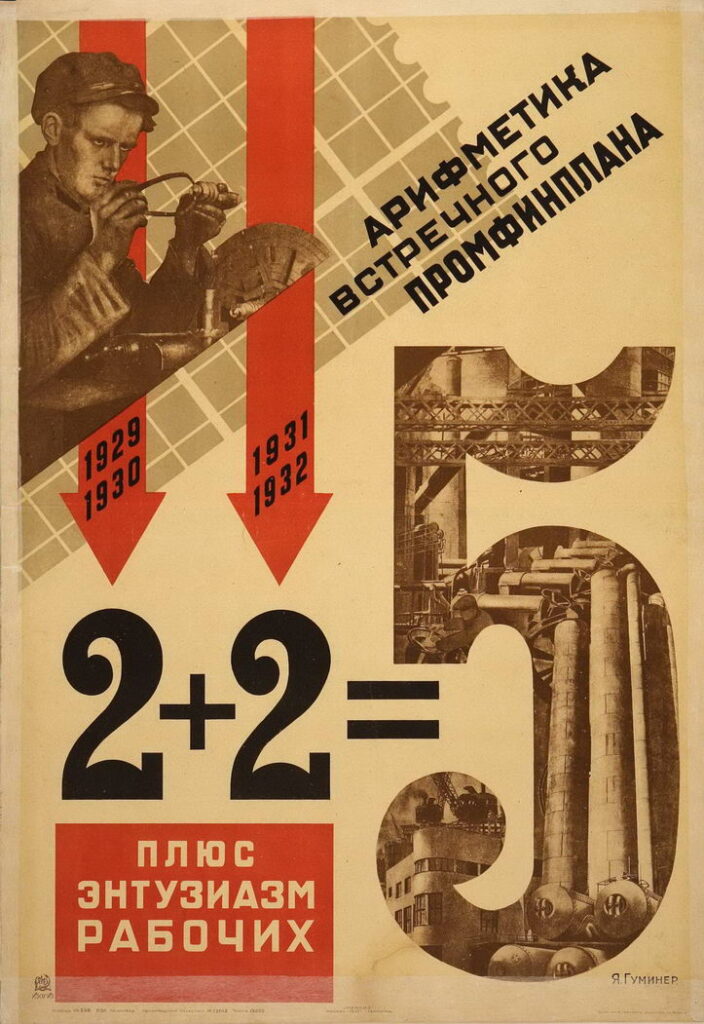
I remember government „motivational speakers„ telling us as children that two plus two equals five because „synergy„. In Orwell’s 1984, English Socialism tortures Winston into believing 2+2=5. Fuzzy thought rots code. Let me show you how to wring it out.
Get early access and the code
Go hard!
We can make the computer pinch us for a reality check using an assert statement in Python.

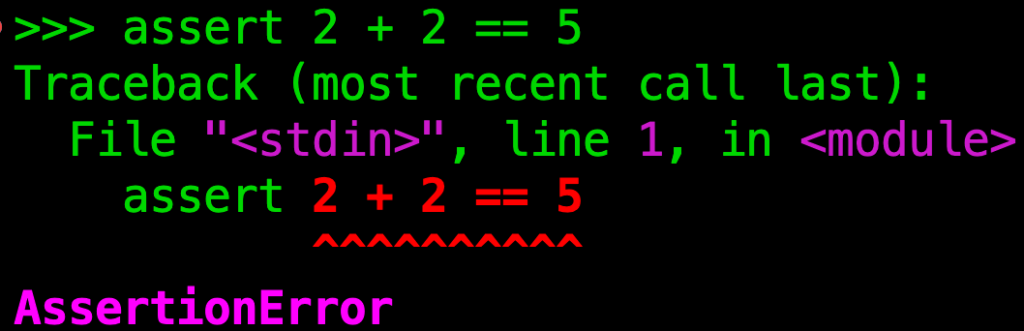
The next thing to do is something unholy: assert that two plus two equals five. assert 2 + 2 == 5 You will see red. Python is not amused.
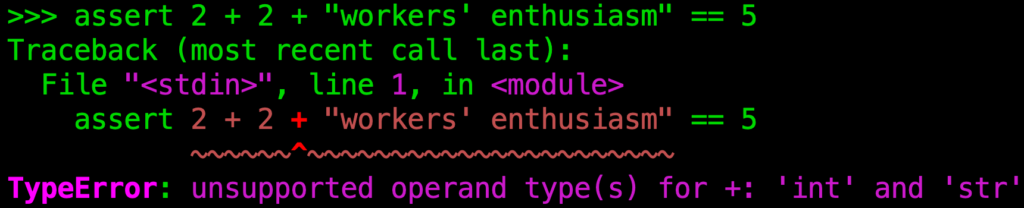
Now we can try the Soviet quip 2 + 2 + „workers’ enthusiasm„ = 5. Computer says no, since you’re adding apples and oranges, i.e. the integer 4 and text string „enthusiasm„. Python calls bull: the claim is too nonsensical to even check.
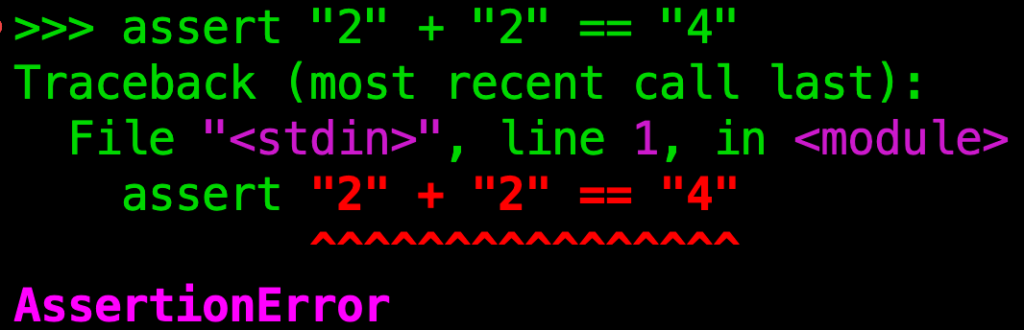
We saw that Python refuses to add numbers and words. We’re going to train and tame AI with text anyway. So let’s wrap our numbers in quotes to tell the computer to treat them as text, or strings in geekspeak. Let’s try „2„ plus „2„ equals „4„.
Steps
- Open the project folder in VS Code.
- Open this file:
test_sanity.py- Read the example
assertstatements. - Run the file and watch what happens.
- Change one passing
assertinto a failing one.
Example:
assert 2 + 2 == 5- Run the file again.
- Read the error message Python gives you.
- Fix the broken
assertso the file runs again. - For the homework, replace the
???with your own answer:
assert "2" + "2" == ???- Run the file one last time and make sure every
assertpasses.
Bibliography
- Orwell, G. (1949). 1984. Secker & Warburg.
Ready to go hard?